BRICS and BUGUDA
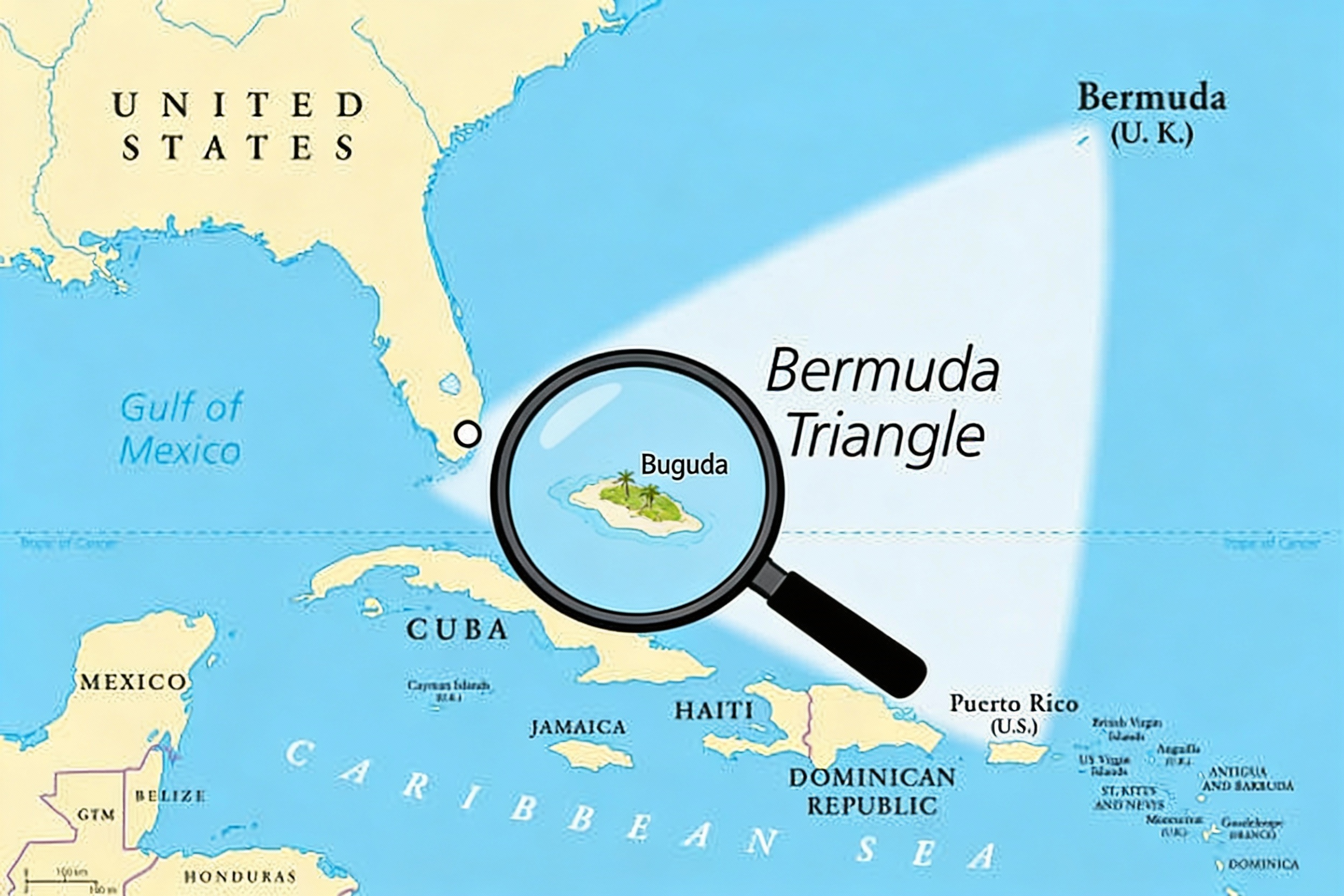
Bonds up, Gold up, Dollar ascendent. B.U.G.U.D.A!
That's how you know BRICS is winning.
“Buh-GOO-da.” It’s like a place in that Beach Boys song. As much as I would love it to be a tiny island off the Florida Keys with a secret Sino-Russian nuclear arsenal, really, it’s my simple metric to measure BRICS’ success in dethroning the U.S.A.
Here's the metric:
- Is the yield of the 30-year U.S. government-bond going up?
- Is the price of gold going up?
- Is the U.S. dollar going up?
“Yes, yes, and yes” means that BRICS is definitely winning at the moment.
We have moved into an era of economic warfare; a new version of Mercantilism. Most of the warfare takes place behind the scenes. We can get a vague sense of the state of play from bonds, gold, and the dollar. Let me lay out why this is so.
Bonds Up
I say “bonds up” but really it’s “bond-yields up.”
Bond-yields rise when people don’t want bonds so much.
I myself think longterm bonds suck. I don’t trust governments to pay me back in 30 years. However, be the yield 15%, my ears would prick up, and I’d say to myself: “come now, there’s no need to be so paranoid...”
I wrote “when people don’t want bonds so much”, but that makes it sounds like Ma and Pa buy bonds. To be accurate, the main buyer of bonds is banks. So, the biggest impact on yield is the degree to which banks are buying U.S. bonds. All the BRICS banks are buying less U.S. bonds. When they buy a lot less bonds, you’ll see the yield-rate go up.
Actually, there’s another group that affects the yield more. It’s the BRICS-adjacent banks in nation-states like Saudi Arabia, Algeria, Thailand, and Pakistan. These guys sway back and forth, and when they sway towards BRICS, they buy less bonds. One might throw in the allies which Trump rubs up the wrong way. For example, as I’m writing this, Denmark just betokened that it will dump $100 million in U.S. bonds.
The U.S. bond-yield is hard to stir, truth be told, like someone drowsy on Trazodone. The bond market is on an artificial downer. The U.S. can, and does, print money to buy its own bonds and distort the market. So, for this metric, it’s better to be more modest. It would be better to say that the bond-yield not going down is a sign of BRICS winning.
Gold Up
If all the big banks in BRICS countries are buying fewer bonds, then what are they buying instead? You know it already: gold.
This one is easy to grasp. The economic scepter of the U.S.A. is the dollar. It’s still not the norm to do international business in any other currency. The USD is the unit of account. That’s why when we say bitcoin is “92,000 dollars”, we have used the USD as a measuring-stick without even thinking.
John Maynard Keynes suggested that there should be a non-nation-state, common currency for the World, in the same way that there is Esperanto for communication. That was at Bretton Woods, 1944. I reckon that a kind of Esperanto for money would have been much better for the World; but we don’t have to invent an artificial form of money; we already have a great, neutral, common currency, and that’s gold. It is hardly surprising that the U.S. government and media have been belittling gold ever since.
Gold is remonetizing. After all these years, governments have begun the process of trading goods for gold. Banks can now use gold as the bedrock of their reserves, rather than U.S. I.O.U.’s, such as bonds mentioned above. The best that the U.S.A. can do now is to slow the process. That didn’t work in 2025. Leading the pack was the Chinese central bank, the P.B.O.C.
To be clear, ‘gold up’ is not the goal of BRICS; it is the outcome of a loss of faith in the dollar and the U.S. economy in general.
Dollar Ascendent
If gold is going up, shouldn’t the dollar be going down?
This one seems counter-intuitive. BRICS winning and the World dedollarizing— doesn’t that mean less demand for dollars? Less demand for something would normally mean a lower price. That’s the Law of Supply and Demand. We can’t break that law! Indeed, we don’t. It’s the lack of supply causing the rise in price. When a lack of supply meets a ‘sticky’ demand (i.e. can’t be changed), the people demanding the good have no choice but to bid up the price.
Here’s an analogy how the supply goes down and leaves people in a sticky situation. Imagine that there is a group of eight friends and every Sunday they row down a river. They go past their homes, because they all live along the river. Then they row back to whence they started, and go to the pub. This Sunday, on the way down, they get into an argument. (It’s over Margaret Thatcher, whether she was a good prime minister, but that’s beside the point.) The mood is sullen. On the way back the first friend comes to the part of the river near his house, jumps overboard, and swims to the riverbank. He wants to get home as soon as possible. Then the next one reaches the point where his house is, jumps overboard, and swims to the riverbank. Then the next, and the next. Now there are four people left. Rowing is much harder, but they can’t stop. Each person needs to get to his home at least. It might be the case that only one person is left rowing by the end.
The need to keep rowing to get home is analogous to fulfilling a contract. There are millions of contracts outside the U.S.A. using USD. When banks dedollarize, they have less deposits of USD to lend out. This is like how there are less rowers in the boat. The people still in the boat are like the companies with contracts to fulfill and they can’t just stop rowing. They must go to the exchange market and pay more to get dollars. This pushes up the price of USD. It’s right according to plan. BRICS want the American goods to be overpriced junk. It’s Mercantilism.
The State of Play
Bonds
last year...
4.8% => 4.8%
= BRICS winning, just
Gold
last year...
$2.7k => $4.6k
= BRICS winning
Dollar
last year...
1.08 => 0.097
= BRICS losing
Verdict
2-1. BRICS is ahead at this stage, but the U.S.A. made a big comeback in 2025. The fall in the dollar, thanks partly to the tariffs, was a big win for Trump’s team. Watch the bond-yield in 2026. The U.S.A. needs to pull it down. China in particular knows that, and has the power to prop it up by selling more and more of them.
Outro
Off the Florida Keys
There's a place called Buguda, oh!
That's where you don't wanna go
To get away from it all...
Bodies in the sand,
skin melted off their hands
Geiger counter crackles like mad
in the quintillion band...